Practical guide
Choosing product labels in the UAE: paper, laminated paper or clear PVC
Compare Lamasatna’s three label types. Check readability, container shape and real use conditions before choosing paper, laminated paper or transparent PVC.
Start with where the label will live. A dry gift box, a regularly handled bottle and a clear container ask different things of the label—even when they carry the same logo.
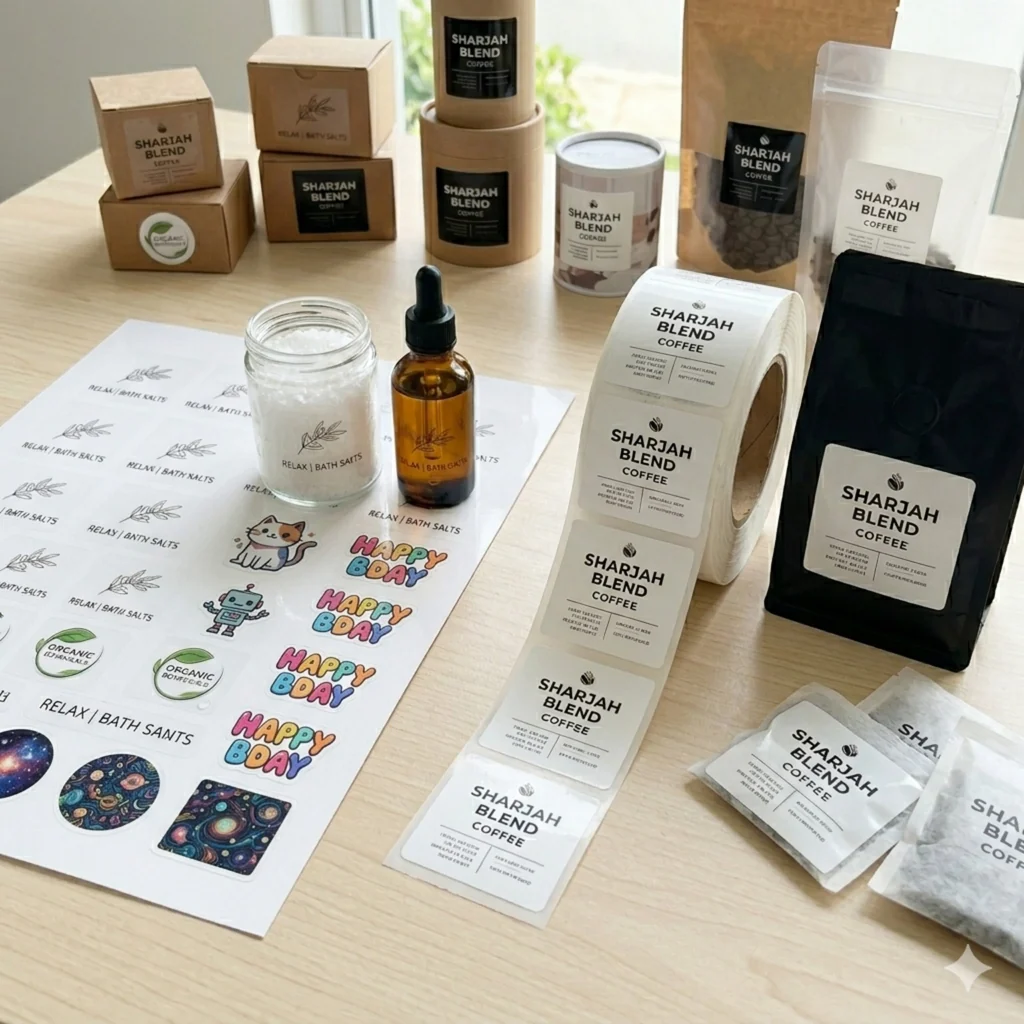
The three label choices at Lamasatna
| Choice | When to consider it | Check before ordering |
|---|---|---|
| Paper sticker | A paper appearance for dry packaging, gift boxes or short-use indoor labels. | Handling, the container surface and any exposure to moisture or oil. |
| Paper sticker with lamination | A paper label with a protective film over its printed face. | Finish, handling resistance, cut edges and whether the whole label suits the intended conditions. |
| Transparent PVC sticker | A clear label where some of the container should remain visible. | Text contrast on the filled container, colour appearance, white elements and adhesion. |
These are the three choices in this label service. Metallic, holographic and other speciality stocks are not part of this three-option list. Ask for a separate confirmed scope if you need something different.
For a dry box, keep the first sample simple
Paper can be a sensible starting point for a dry carton, a gift seal or a product that stays indoors. Choose a readable size and see how the label sits on the actual packaging. A textured carton, a fold or a tight curve may affect how its edges hold.
For a new product, it is often more useful to improve the logo, product name and reading order than to choose a more elaborate stock immediately. Print a sample at the final size. Read it at the distance at which someone will pick up the product—not enlarged on a phone.
Lamination protects the face; ask about the whole label
Lamination adds a film over the printed paper. That can be useful when the face of the label receives handling, but it does not turn every paper label into an all-purpose waterproof label. The adhesive, paper edges, print system and container still matter.
Describe the real conditions: occasional splashes, a chilled bottle with condensation, oily hands, a cleaning product or prolonged outdoor exposure. Those are different requirements. A general promise of “water resistance” is not the same as approval for immersion or a dishwasher.
Transparent PVC: design against the real background
A clear label lets the package colour or contents become part of the design. Put a printed sample onto a filled container. Dark liquid can swallow dark lettering; a changing product colour can make the same artwork look different between batches.
Ask how white text and pale colours will be produced before approving the file. A white area on a computer screen does not by itself confirm that opaque white will be printed. Check the agreed print specification rather than assuming the transparent stock will make every design readable.
A short sample test prevents a large reprint
- Use the actual container. Identify its material, texture and any coating. Make sure the label fits the intended straight or curved area.
- Follow the application instructions. Surface preparation and the time before use should match the label and adhesive supplied.
- Check the final artwork. Read the smallest text, verify every number and scan the QR or barcode on the finished package if one is present.
- Try the expected handling. Check the use conditions you described to the printer and inspect for lifting, smearing or an unacceptable change in appearance.
- Keep an approved reference. Record the stock, finish, size and artwork version so a repeat order means the same thing.
A sample check is not a substitute for a certification your product may require. Food-contact, chemical, outdoor-life and dishwasher claims need the appropriate confirmed specification; they should not be inferred from “PVC” or “laminated.”
What to include in your UAE label enquiry
- The number of labels, each label’s width × height, and its shape.
- Your choice of paper, laminated paper or transparent PVC—or the conditions you need help matching.
- A photo and material description of the container.
- The artwork and whether it contains white elements, fine text, variable information or a QR/barcode.
- The intended use, delivery city and required date.
Ask for the current rate and a confirmed sheet layout before ordering. The number of usable labels depends on their size, shape and spacing; it is not just the sheet area divided by the label area.
Choose a label for your product with Lamasatna
Technical references
Avery explains water-resistant versus waterproof performance and printing-system differences. Avery’s film-label examples show why durability belongs to a tested material system. Their specifications are for their own products; they are not a durability certification for a Lamasatna label.
Sources and references
- www.avery.ae/tips/film-labels-vs-paper-labels · Reviewed 2026-11-04
- www.avery.com/help/article/blank-labels-water-resistant-and-waterproof-materials · Reviewed 2026-11-04
- lamasatna.com/ask/ · Reviewed 2026-11-04